

Noor Eye Care

Cataract

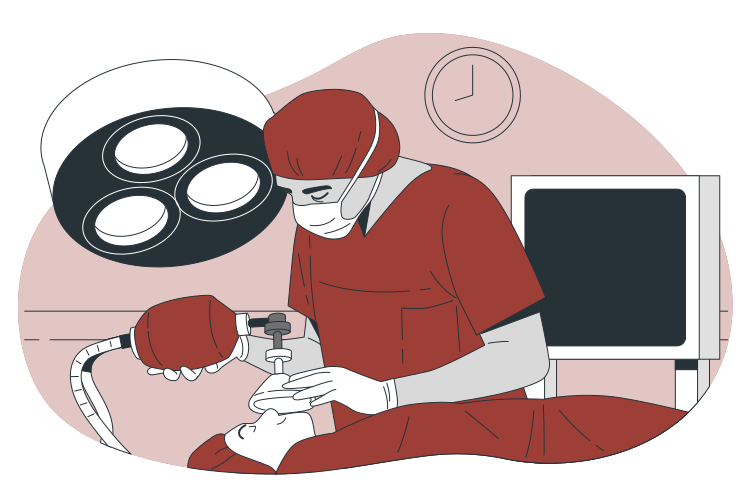
Cataract Treatment

Dedicated to delivering top-quality cataract care, with skilled surgeons who stay up to date with the latest techniques and advancements to ensure safe, effective, and modern treatment for every patient.
Image

Easy Appointment Booking

We conduct thorough, step-by-step eye examinations to ensure every aspect of your vision and eye health is carefully assessed.

Care by Experienced Specialists

Our team of seasoned ophthalmologists and optometrists bring years of clinical expertise, ensuring you receive trusted and precise care.

Comfortable & Patient-Friendly Process

From check-in to consultation, we prioritize your comfort with a calm, welcoming environment and supportive staff every step of the way.

Quick approval process

We strive to provide a quick approval process, so that customers can get the funding they need as soon as possible.

Preparing for your visit – what to bring

  • Previous Eye Exam Records: If you’ve had an eye checkup or treatment in the past, please bring any related reports, prescriptions, or test results.
  • Current Eyeglasses or Contact Lenses: Bring your current pair of glasses or contact lenses so we can assess your existing prescription.
  • List of Medications: Include any medications you’re currently taking, especially those related to eye health or chronic conditions (e.g., diabetes, high blood pressure).
  • Medical History Details: If you have any existing health conditions or allergies, let us know during your visit. A printed list or summary is helpful.
  • Referral Letter (if required): If you've been referred by another doctor, please bring the referral note.

We recommend arriving 10–15 minutes early for your appointment to complete any necessary paperwork.

Book an Appointment with Our Eye Care Experts

{{ errors.name }}

{{ errors.phone }}

{{ errors.issue }}

{{ errors.appointment_date }}

{{ errors.appointment_time }}

What is Cataract?
Cataract is a condition where the eye's natural lens becomes cloudy, leading to a gradual decline in vision. While it is most common in older adults, cataracts can also develop in younger individuals due to various factors. Understanding the causes and effects of cataracts is crucial for timely diagnosis, effective management, and appropriate treatment.
Causes
Cataracts can develop due to aging, smoking, obesity, diabetes, eye injuries, radiation exposure, or inflammation within the eye.
Symptoms
Common signs and symptoms of cataracts include:
  • Blurred or hazy vision: Objects may appear cloudy, foggy, or out of focus.
  • Difficulty with night vision: Difficulty with night vision:
  • Faded or yellowed colors: Colors may appear dull or have a yellowish tint.
  • Increased sensitivity to glare: Bright lights may cause discomfort or make it harder to see.
  • Double vision in one eye: Seeing two images of a single object with the affected eye.
  • Halos around lights: Circular halos or starbursts may appear around lights, especially at night.
Cataract Services We Offer
  • Phacoemulsification with Foldable IOL: A minimally invasive technique involving a 2.8 mm corneal incision. The cataract is broken up and removed using an ultrasonic phacoemulsification probe, followed by the implantation of a foldable intraocular lens (IOL).
  • Multifocal IOL Implantation: Multifocal intraocular lenses are implanted to correct both near and distance vision, reducing or eliminating the need for spectacles. Most patients experience significant improvement, though a small percentage may occasionally require minor vision correction.
  • Micro-Coaxial Phaco Surgery: This advanced technique reduces the incision size to under 2.2 mm. It incorporates micro-coaxial phacoemulsification, irrigation, and aspiration using specialized instruments. Compared to standard small-incision surgery, this method offers faster healing, reduced surgically induced astigmatism (SIA), improved postoperative visual clarity, lower infection risk, and enhanced corneal stability.
  • Premium Cataract Surgery Options: We also offer premium surgical options tailored to patient needs, including Mono-vision correction, Toric IOLs for astigmatism, Aspheric IOLs for better contrast sensitivity, and Multifocal IOLs for clear vision at all distances—near, intermediate, and far—without visual distortion.

Frequently Asked Questions about Cataracts

The three primary types of cataracts are:

  • Nuclear Sclerotic Cataracts: These develop in the center (nucleus) of the lens and are commonly age-related.
  • Cortical Cataract: These affect the outer edges (cortex) of the lens and appear as white, wedge-shaped opacities.
  • Posterior Subcapsular Cataracts: These form at the back of the lens and tend to progress more quickly, often affecting reading vision and causing glare.

Cataracts cannot be reversed with medications or non-surgical treatments. While early-stage symptoms may be managed with lifestyle adjustments and vision aids, surgery is the only definitive cure for cataracts.

During cataract surgery, the cloudy natural lens is removed and replaced with a clear artificial intraocular lens (IOL). In rare cases where an IOL cannot be implanted, vision correction may be achieved with special contact lenses or glasses.

Although cataracts can't be entirely prevented, you can slow their progression by:

  • Wearing UV-protective sunglasses
  • Eating a diet rich in antioxidants (e.g., leafy greens, fruits, nuts)
  • Avoiding smoking and excessive alcohol consumption
  • Managing chronic conditions like diabetes
  • Attending regular eye check-ups to monitor changes early

Phacoemulsification offers several key benefits:

  • No need for hospitalization
  • Short procedure time
  • Smaller surgical incision
  • Fewer complications and quicker recovery
  • No major restrictions on daily activities

Multifocal intraocular lenses are designed to correct vision at various distances—near, intermediate, and far—by distributing incoming light to different focal points. This reduces or eliminates the need for glasses after cataract surgery.

Multifocal contacts are specifically made to provide clear vision at all distances. Most people don’t require additional reading glasses. However, some may prefer using them for specific tasks, depending on personal comfort and prescription strength.

Phacoemulsification is widely considered the most effective method due to its:

  • Minimally invasive approach
  • Faster healing time
  • Smaller surgical incision
  • High success rate
  • Reduced postoperative discomfort

Your Eyes Deserve Expert Care, Schedule You Visit Today!

Facing blurry vision, eye strain, or discomfort? Be among the first to get expert attention from our specialists.